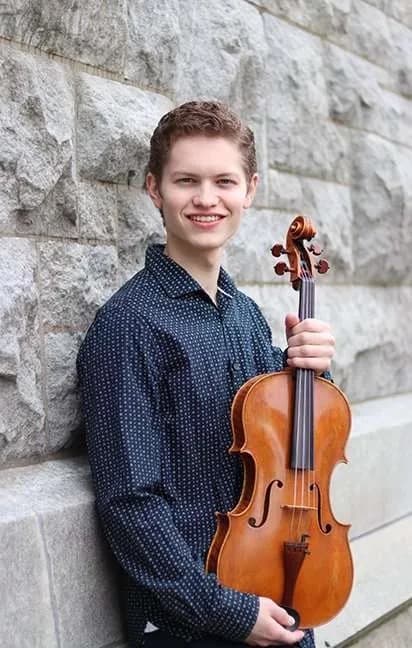
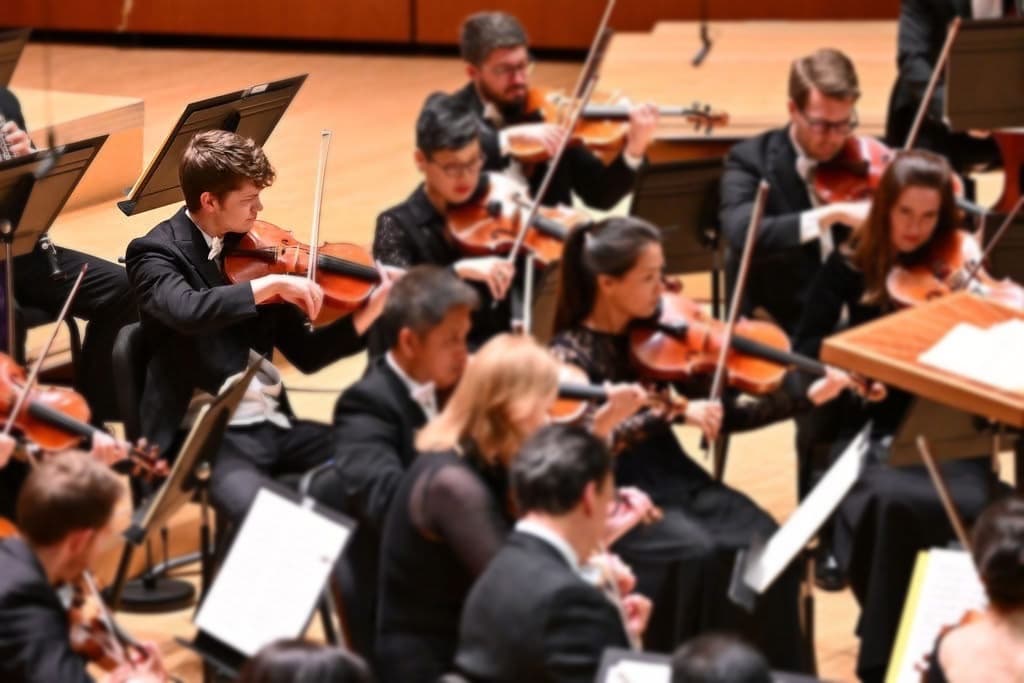
Canadian violist Matthew Eeuwes is a regular player with the Atlanta Symphony Orchestra. He previously served for three and a half years as assistant principal viola of The Florida Orchestra, and as a member of the viola section of the Rochester Philharmonic Orchestra.
A graduate of the Eastman School of Music, Eeuwes earned his bachelor of music degree in violin performance under the tutelage of Renée Jolles. During his studies, he fell in love with the lower timbre of the viola and subsequently went on to earn his master of music in viola performance and literature under the guidance of Phillip Ying.
In 2020, he received the Ihnatowycz Emerging Artist Scholarship, a full scholarship to study at the Glenn Gould School of the Royal Conservatory of Music in Toronto. In the summers of 2019 and 2021, he was a fellow at the Toronto Summer Music Festival, where he played and worked alongside members of the Dover String Quartet and New Orford String Quartet.
Eeuwes served as lecturer in secondary viola studies at the Eastman School of Music and has been a private music instructor for the past fifteen years, teaching violin and viola lessons to students of all levels and ages.
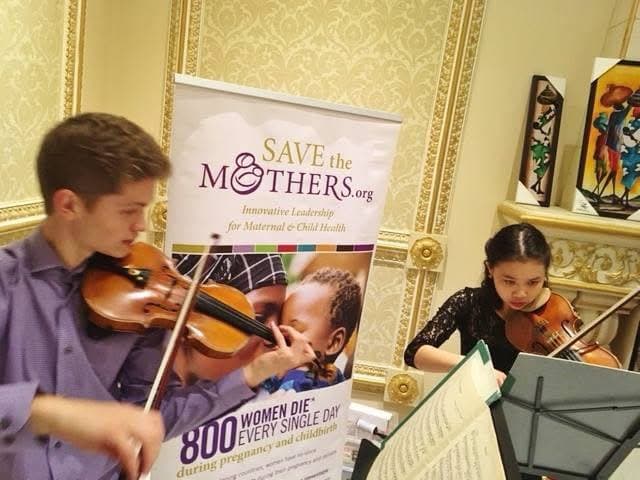
He also enjoys using his musical abilities to make a difference in his community and abroad. One organization close to his heart is Save the Mothers, a non-profit that focuses on decreasing maternal mortality in East Africa; over the past few years, his performances have raised thousands of dollars for the organization.
He now resides in Johns Creek, Georgia, with his wife Yen and their one-year-old son.
Teaching philosophy
My approach is to shape a tailored experience for each student around their individual goals and aspirations. Not everyone studies music to pursue it as a career — many take lessons purely for the joy of it — so I make certain the practice expectations I set are always reasonable for each student's life and ambitions.
With younger students, I like to begin by speaking with parents to understand what they hope their child will gain from lessons. When a student is just starting out, it's also important that both the student and the parents understand what learning the violin or viola truly involves. The earliest stages call for careful attention to fundamental set-up and technique, and it is my goal for every student to build a sound, reliable foundation from the very beginning.
Beyond technique, my objective for each student is to support their growth musically, mentally, and emotionally — through a lesson environment that is positive, understanding, and encouraging. My greatest hope, one that reaches well past the studio, is to share my own love of music so that each student develops a lasting appreciation for it. Even if a student one day moves on from the violin or viola, I want them to look back on our work together with warmth.
In practice, students work on assignments that advance both technical facility and musical expression — concert repertoire, scales, and études, each chosen for their current level and where they are headed. I also believe self-reflection is essential to musical development, so much of my teaching is aimed at helping students become their own teacher. After a run-through or performance, I'll often ask what they felt they could improve, building the habit of thoughtful, articulate self-assessment.
Finally, learning music means learning how to share it. I want performing to feel natural rather than nerve-wracking, so we make sharing music a regular, welcoming part of studio life. Our students perform in recitals every couple of months, and each year we organize a major music festival that we encourage every student to work toward — meaningful milestones that give them something to strive for and a stage to celebrate their progress.